October 14, 2026
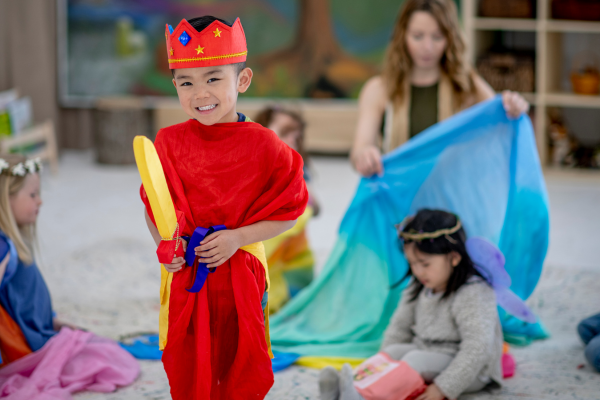
With Halloween approaching, you may see more dress-up and make-believe coming up in your visits — a good reminder to talk to families about the power of pretend play.
When a child pretends to be someone else, they might look like they're just having fun, but they're doing some of the most sophisticated cognitive work of early childhood. Pretending to be a firefighter, a parent, or a monster lets a child practice imagination, problem-solving, and social understanding all at once. Role-play is also where children rehearse emotional regulation and early language and thinking skills — testing what happens, what comes next, and how others might feel. These are the same muscles that help kids sit still, pay attention, and get along with others.
Parents witness this all the time, often without realizing how much it’s doing. Naming the skills their children are building can help them understand how much value there is in these everyday moments.
Try sharing these ideas with families this week:
1. Lower the bar for what counts as a costume. A family without a store-bought costume hasn't missed out. Try asking whether they have any dress-up clothes at home, then remind them that everyday objects work just as well — a pot becomes a helmet, a broom becomes a horse, a caregiver's old shirt becomes a cape.
2. Encourage caregivers to play along. Pretend play stretches furthest when an adult joins in and follows the child's lead. A parent who asks "Where is your spaceship headed?" instead of directing the story helps the child build language and narrative skills.
3. Point out that the child is in charge. In pretend play, the child sets the rules. That sense of agency supports confidence and self-regulation.
